Blog

Your blog category

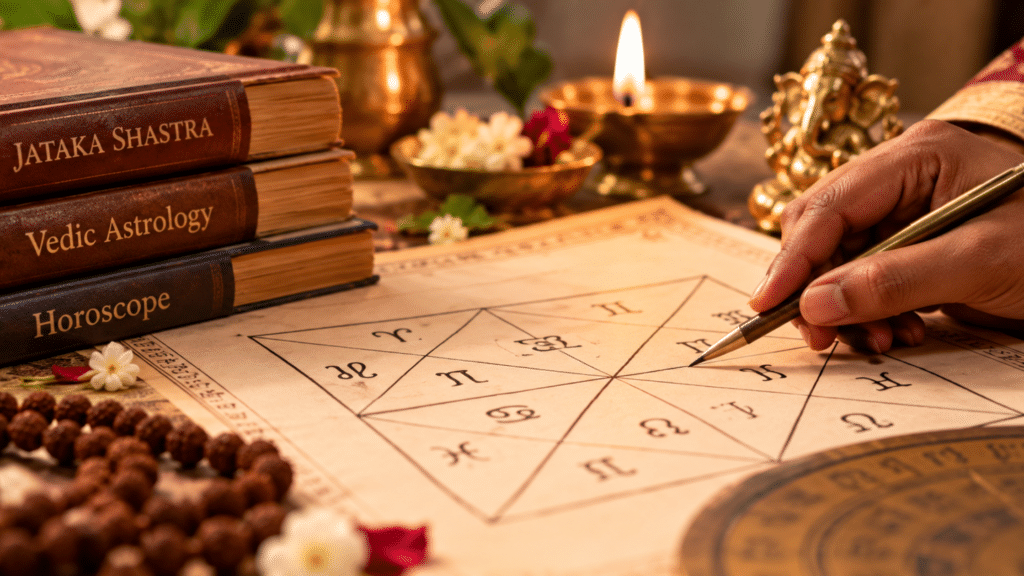
Jathaka reading and Vedic horoscope consultation at Kerala Bhagavathi Jyothishya Mandira in Bangalore.
Blog

Jathaka Reading in Bangalore

Jathaka Reading in Bangalore Many people turn to astrology when they want to reflect on important decisions, understand traditional interpretations of their birth chart or explore questions about career, marriage and personal life. In Vedic astrology, a Jathaka, also known as a birth horoscope, is prepared using an individual’s birth details and interpreted according to traditional astrological principles. If you are searching for Jathaka reading in Bangalore, understanding how the process works can help you know what information to provide and what to expect from a consultation. What Is Jathaka Reading in Vedic Astrology? Jathaka reading is the traditional practice of interpreting a person’s birth horoscope using their date, time and place of birth. Within the Vedic astrology tradition, the chart represents the positions of celestial bodies at the time of birth and is interpreted according to established astrological concepts. A Jathaka reading may examine elements such as: Rashi: The zodiac sign associated with a particular placement in the birth chart. Nakshatra: The lunar constellation associated with the Moon’s position. Lagna: The ascendant or rising sign calculated from the birth details. Planetary placements: The positions of planets across the houses and signs of the chart. Dasha periods: Traditional astrological periods used by practitioners to interpret different phases of life. The meaning assigned to these elements depends on the astrological system and the practitioner’s interpretive approach. Astrology is a traditional belief system, not a scientifically established method for predicting future events. Why Do People Seek Jathaka Reading in Bangalore? People may seek Jathaka reading for personal reflection, cultural traditions or an understanding of how Vedic astrology interprets different aspects of life. 1. Career and Professional Questions Career decisions can involve uncertainty, changing priorities and personal goals. A traditional horoscope consultation may provide an astrological perspective for people who wish to explore career-related questions within the Vedic tradition. Such guidance should complement practical considerations, including qualifications, finances, professional opportunities and individual circumstances. 2. Marriage and Compatibility Jathaka and horoscope matching are part of certain Indian marriage traditions. Some families consult astrologers to examine birth charts and traditional compatibility factors before marriage. If you are considering a compatibility consultation, ask the practitioner which chart elements are assessed and how the interpretation is explained. Marriage decisions should ultimately be based on mutual respect, consent, communication and compatibility in everyday life. 3. Family and Personal Matters Family relationships and personal decisions can sometimes feel complicated. People may seek astrology consultations to explore traditional interpretations of their circumstances and reflect on possible ways forward. At Shri Kerala Bhagavathi Jyothisya Mandira, the published service range includes personalized astrological guidance for family and relationship concerns. 4. Business and Financial Considerations Some individuals consult Vedic astrologers when considering business plans, professional changes or financial questions. A horoscope reading can offer a traditional astrological viewpoint, but it cannot guarantee business success or financial outcomes. Decisions involving investments, borrowing or business commitments should be supported by appropriate professional advice and practical research. How Does a Jathaka Reading Consultation Work? If you are planning a Jathaka reading in Bangalore for the first time, understanding the usual process can help you prepare. Step 1: Share Your Birth Details A horoscope is traditionally prepared using three key details: Date of birth Time of birth Place of birth Accurate information helps the astrologer calculate the chart according to the selected astrological system. If your birth time is uncertain, tell the practitioner rather than assuming an exact time. Step 2: Prepare the Birth Chart The practitioner uses the birth details to prepare or review the Jathaka. This may involve examining the ascendant, zodiac signs, nakshatra and planetary placements according to Vedic astrology. Step 3: Discuss Your Questions You can explain the areas you would like to discuss, such as career, marriage, family or business. Preparing a few clear questions can help keep the consultation focused on your concerns. Step 4: Understand the Interpretation The astrologer explains the chart according to traditional astrological principles. Ask questions if a term or interpretation is unclear, and consider the guidance thoughtfully rather than treating it as a guaranteed prediction. Step 5: Discuss Traditional Guidance, If Relevant Depending on the consultation, a practitioner may discuss traditional spiritual practices or remedies. Before agreeing to any paid service or remedy, ask about its purpose, cost and what it involves. Why Consider Shri Kerala Bhagavathi Jyothisya Mandira? When choosing an astrology consultation in Bangalore, it is helpful to understand the practitioner’s approach, the services offered and how personal information is handled. Shri Kerala Bhagavathi Jyothisya Mandira presents its services around traditional Vedic astrology and personalized spiritual guidance. Its website highlights the following aspects of its consultation approach.  Kerala Bhagavathi Astrologer Traditional Vedic astrology: Consultations rooted in established astrological concepts. Personalized guidance: Discussions based on individual circumstances and the questions raised during consultation. Horoscope analysis: A service for people interested in interpreting their birth chart. Relationship and family guidance: Traditional astrological perspectives on personal and family concerns. Spiritual consultation: Guidance for individuals interested in traditional spiritual practices. Privacy and discretion: The centre states that it values confidentiality during consultations. These are descriptions of the centre’s published approach, not guarantees of particular outcomes. Jathaka Reading in Electronic City, Bangalore Finding a convenient consultation location can make it easier to plan your visit. Shri Kerala Bhagavathi Jyothisya Mandira is listed at Konappana Agrahara, Electronic City, Bengaluru, Karnataka 560100.  Kerala Bhagavathi Astrologer If you are looking for Jathaka reading near Electronic City, contact the centre before visiting to confirm appointment availability, consultation fees and the specific type of horoscope analysis you require. You can also ask whether your preferred consultation format is available. Contact details Business: Shri Kerala Bhagavathi Jyothisya Mandira Location: Konappana Agrahara, Electronic City, Bengaluru, Karnataka 560100 Phone: +91 91488 98178 WhatsApp: +91 90369 20094 Email: raghuswamy@keralabhagavathijyothishyamandira.in Website: keralabhagavathijyothishyamandira.in Frequently Asked Questions About Jathaka Reading at Kerala Bhagavathi Jyothisya Mandira 1. Where can I get Jathaka reading in Bangalore from Kerala Bhagavathi Jyothisya Mandira? Shri Kerala Bhagavathi Jyothisya Mandira is located in Konappana Agrahara, Electronic
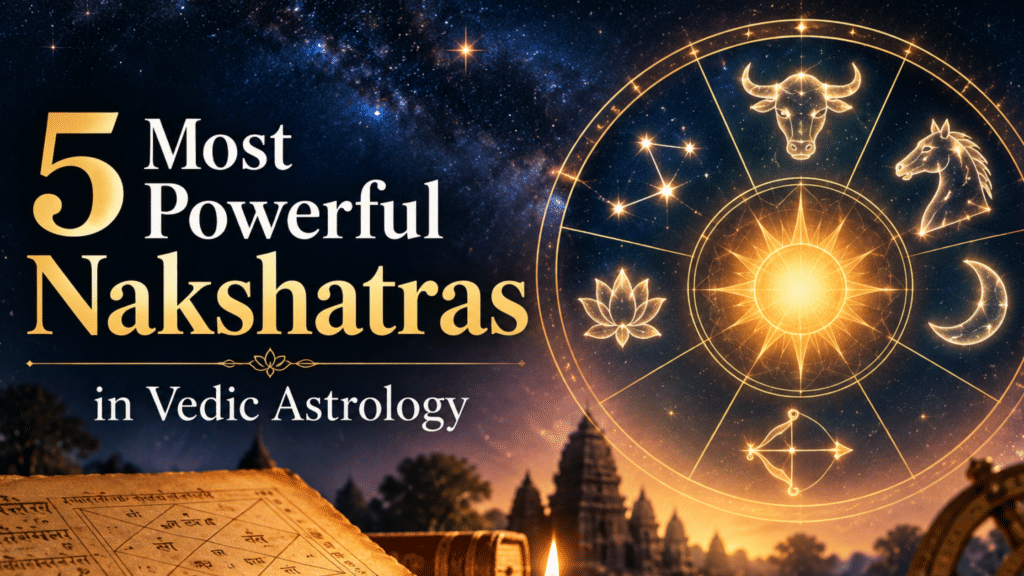
Five powerful Nakshatras in Vedic astrology represented by a traditional celestial zodiac design.
Blog

5 Most Powerful Nakshatras in Vedic Astrology

5 Most Powerful Nakshatras in Vedic Astrology Vedic astrology recognizes 27 Nakshatras, or lunar mansions, that form an important part of traditional Jyotish interpretation. Each Nakshatra is associated with particular symbols, ruling deities, planetary influences, and qualities that astrologers use to interpret a birth chart. Some Nakshatras are traditionally associated with leadership, prosperity, courage, wisdom, spiritual growth, or the ability to overcome challenges. Understanding these associations can help astrology enthusiasts explore the symbolic meanings of their birth Nakshatra. What Are Nakshatras in Vedic Astrology? Nakshatras are 27 divisions of the zodiac used in traditional Indian astrology. Each division covers approximately 13 degrees and 20 minutes of the zodiac, and the Moon’s sidereal position at birth is commonly used to determine a person’s Janma Nakshatra, or birth star. Every Nakshatra has traditional associations, including a presiding deity, ruling planet, symbol, and set of interpretive qualities. Astrologers consider these alongside the Moon sign, planetary placements, houses, and other elements of a birth chart. Which Are the 5 Most Powerful Nakshatras in Vedic Astrology? Rohini, Pushya, Magha, Ashwini, and Uttara Ashadha are five Nakshatras frequently discussed for their traditional associations with growth, nourishment, authority, initiative, and lasting achievement. There is no universally agreed ranking of the most powerful Nakshatras. The following selection highlights five with notable traditional symbolism. 1. Rohini Nakshatra – The Symbol of Growth and Abundance Rohini is the fourth Nakshatra in the traditional sequence and is associated with the Moon as its ruling planet in classical Jyotish. Its presiding deity is commonly identified as Prajapati, associated with creation and fertility. 2. Pushya Nakshatra – The Symbol of Nourishment and Wisdom Pushya is the eighth Nakshatra and is traditionally associated with Brihaspati, the divine teacher and a symbol of wisdom and guidance. Saturn is its ruling planet in the commonly used Vimshottari system. Pushya is frequently described in Jyotish traditions as a Nakshatra associated with nourishment, discipline, learning, service, and spiritual development. 3. Magha Nakshatra – The Symbol of Authority and Ancestral Heritage Magha is the tenth Nakshatra and is associated with the Pitris, or ancestral beings, in traditional Vedic literature. Ketu is its ruling planet in the Vimshottari system. Its symbolism centres on ancestry, heritage, dignity, authority, and the responsibilities that accompany status. 4. Ashwini Nakshatra – The Symbol of Speed and New Beginnings Ashwini is the first Nakshatra in the standard 27-Nakshatra sequence. Its presiding deities are the Ashwini Kumaras, traditionally known as divine physicians, and its ruling planet in the Vimshottari system is Ketu. Ashwini is associated with initiative, speed, vitality, healing symbolism, and the ability to begin new ventures. 5. Uttara Ashadha Nakshatra – The Symbol of Lasting Victory Uttara Ashadha is the twenty-first Nakshatra in the standard sequence. Its presiding deities are the Vishvadevas, a collective group of deities associated with universal virtues. The Sun is its ruling planet in the Vimshottari system. Uttara Ashadha is traditionally linked with determination, integrity, perseverance, and achievement that stands the test of time. How Do You Find Your Birth Nakshatra? Your Janma Nakshatra is generally determined from the sidereal position of the Moon at the time of birth. To identify it accurately, you typically need: Your date of birth. Your exact or sufficiently accurate birth time. Your birthplace. A Vedic birth chart or Panchanga calculation can then be used to determine the Moon’s Nakshatra and its Pada, or quarter. The Pada provides a more specific subdivision of the Nakshatra. Astrologers may also examine the Moon’s sign, planetary aspects, house placements, and planetary periods to interpret its significance. Does Your Nakshatra Determine Your Success? In traditional Vedic astrology, a Nakshatra is considered one component of a much larger birth-chart interpretation. It is not generally used in isolation to assess success, relationships, wealth, health, or personal development. For example, Rohini’s symbolism may be discussed in relation to growth, while Uttara Ashadha is associated with perseverance. These are interpretive themes rather than guarantees that a person will experience a particular result. Frequently Asked Questions About Powerful Nakshatras 1. Which is the most powerful Nakshatra in Vedic astrology? There is no single Nakshatra universally ranked as the most powerful. Rohini, Pushya, Magha, Ashwini, and Uttara Ashadha are often discussed for their traditional associations with growth, nourishment, authority, initiative, and lasting achievement. 2. Is Pushya Nakshatra considered auspicious? Yes, Pushya is traditionally regarded as highly auspicious for many activities in Hindu astrology. However, the suitability of a particular time or activity depends on the astrological tradition and the full context of the Panchanga or birth chart. 3. What is special about Rohini Nakshatra? Rohini is associated with the Moon and Prajapati in traditional astrology and mythology. Its symbolism includes growth, creativity, fertility, nourishment, and abundance. 4. What does Magha Nakshatra represent? Magha is associated with ancestral heritage, dignity, authority, and responsibility. Its traditional symbolism includes the royal throne and the Pitris. 5. Which Nakshatra represents success and determination? Uttara Ashadha is often associated with perseverance, integrity, lasting victory, and long-term achievement. Individual interpretations depend on the wider birth chart. Conclusion The 27 Nakshatras offer a rich symbolic framework within Vedic astrology. Among them, Rohini, Pushya, Magha, Ashwini, and Uttara Ashadha stand out in many traditional discussions for their associations with growth, nourishment, authority, new beginnings, and enduring achievement. Rather than judging a birth chart by a single Nakshatra, traditional Jyotish considers the Moon’s placement alongside planetary positions and other chart factors. Interested in learning more about your Nakshatra? Visit Kerala Bhagavathi Jyothishya Mandira at https://keralabhagavathijyothishyamandira.in/ to explore the organization’s available information and astrology services. Disclaimer: This article discusses traditional Vedic astrology beliefs for educational and cultural purposes. Astrological interpretations are not scientifically established predictions and should not replace professional advice for important personal, financial, or health-related decisions.

Vedic astrology birth chart illustrating four astrological reasons for late marriage
Blog

Learn 4 Astrological Reasons for Late Marriage

Learn 4 Astrological Reasons for Late Marriage Marriage is an important milestone in life, but it does not happen at the same age for everyone. While some people find their life partners early, others may experience delays due to personal choices, career goals, family responsibilities, or difficulties finding a compatible partner. In Vedic astrology, delayed marriage is traditionally studied through the birth chart, also known as the Kundli. Astrologers examine planetary placements, the seventh house, and the timing of planetary periods to understand potential influences on marriage. If you are wondering why marriage is getting delayed, here are four astrological factors traditionally associated with late marriage. Explore: Srikeralabhagavathiastro 1. Saturn’s Influence on the Seventh House Saturn, known as Shani in Vedic astrology, is associated with discipline, patience, responsibility, and delays. Its position in a birth chart is one of the factors astrologers examine when assessing marriage timing. When Saturn occupies or influences the seventh house, which represents marriage and partnerships, some traditional interpretations associate this placement with a later commitment or a more cautious approach to relationships. 2. The Seventh House and Its Lord In Vedic astrology, the seventh house is closely associated with marriage, committed partnerships, and relationships. Astrologers assess the seventh house along with its ruling planet, commonly called the seventh lord, to interpret traditional indications related to marriage. If the seventh lord is considered weak or receives challenging planetary influences, some astrological interpretations associate these combinations with obstacles or delays in finalising a marriage. 3. The Influence of Venus and Jupiter Venus (Shukra) and Jupiter (Guru) are important planets in traditional Vedic astrology interpretations of relationships and marriage. Venus is associated with attraction, affection, harmony, and relationships. Jupiter is associated with wisdom, guidance, growth, and auspiciousness. Depending on the individual’s birth chart and the astrological tradition being followed, astrologers may interpret challenging placements or influences involving these planets as factors worth examining when marriage is delayed. 4. Mangal Dosha and Planetary Periods Mangal Dosha, also known as Kuja Dosha, is another factor considered in certain Vedic astrology traditions. It is associated with the placement of Mars (Mangal) in specified houses of the birth chart. Some traditional interpretations examine Mangal Dosha when assessing relationship compatibility or possible marriage-related challenges. However, its significance depends on the full chart, including applicable cancellation rules and other planetary influences. Can Astrology Help You Understand Delayed Marriage? A Vedic astrology consultation typically involves examining several connected factors rather than relying on a single planet or house. Depending on the astrologer’s approach, this may include the seventh house, its ruling planet, Venus, Jupiter, Saturn, Mangal Dosha, and planetary periods. An individual interpretation may offer a traditional astrological perspective on marriage timing and relationship compatibility. However, astrology cannot scientifically guarantee when a person will marry or establish that a planetary placement is the cause of a delay. Seek Traditional Marriage Astrology Guidance If you are interested in understanding marriage-related questions through the traditional principles of Vedic astrology, Kerala Bhagavathi Jyothishya Mandira can be considered as a starting point for exploring astrology guidance. Before arranging a consultation, enquire about the services offered, the birth details required for a chart reading, and the consultation process. Frequently Asked Questions: 1. What are the main astrological reasons for late marriage? In Vedic astrology, four commonly discussed factors associated with delayed marriage are Saturn’s influence on the seventh house, the condition of the seventh house and its ruling planet, the influence of Venus and Jupiter, and Mangal Dosha or certain planetary periods. 2. Does Saturn cause delays in marriage according to Vedic astrology? Traditional Vedic astrology associates Saturn with patience, discipline, and delays. When Saturn influences the seventh house or its ruling planet, some astrologers interpret it as an indication of later marriage. However, Saturn’s placement alone cannot determine whether or when someone will marry. 3. Which house in a Kundli represents marriage? The seventh house is traditionally associated with marriage, committed partnerships, and relationships in Vedic astrology. Astrologers also examine its ruling planet and other relevant chart factors when interpreting marriage timing. 4. Can Mangal Dosha lead to late marriage? Some Vedic astrology traditions associate Mangal Dosha with potential relationship or compatibility challenges. Its interpretation depends on Mars’s placement, the complete birth chart, and applicable cancellation rules. Mangal Dosha alone should not be treated as proof that marriage will be delayed. 5. Can astrology predict when I will get married? Vedic astrologers may examine planetary periods, the seventh house, and other chart factors to offer a traditional interpretation of possible marriage timing. People across Bangalore who are interested in traditional Vedic astrology may explore birth chart interpretations for marriage timing and compatibility. Kerala Bhagavathi Jyothishya Mandira provides an official online point of contact for readers who wish to enquire about its available astrology services. Visit the website to learn more about the organisation and confirm consultation options. https://keralabhagavathijyothishyamandira.in/  

Vastu tips for home and office layout
Blog

Vastu Tips for Home & Office

Vastu Tips for Home & Office Vastu is an ancient Indian architectural and spatial planning tradition that focuses on the arrangement and use of spaces. Many people consider Vastu tips when designing a new home, purchasing a property, arranging an office, or making changes to an existing space. Whether you are planning a house or setting up a workplace, simple Vastu principles can help you think carefully about directions, room placement, entrances, natural light, ventilation, and the overall organization of your space. What Is Vastu? Vastu Shastra is a traditional Indian system associated with architecture and spatial planning. It considers factors such as directions, layout, proportions, entrances, and the placement of different spaces within a property.a Why Do People Follow Vastu Tips? People may consider Vastu for different reasons, including: Planning a new home Choosing a property Designing an office Arranging rooms and furniture Planning entrances Improving natural light and ventilation Creating an organized living or working environment Vastu preferences can differ depending on the individual, property, tradition, and practitioner’s approach. Vastu Tips for Home Your home is where you spend a significant amount of your time. When planning or arranging your home, you can consider basic Vastu principles along with practical requirements such as safety, ventilation, lighting, and functionality. 1. Consider the Main Entrance The main entrance is an important element in traditional Vastu planning. When designing a new home, the entrance direction and placement can be considered as part of the overall floor plan. 2. Keep the Entrance Clean and Organized A simple practical Vastu tip is to keep the entrance area clean, well-lit, and free from unnecessary clutter. An organized entrance can make the space feel welcoming and easier to maintain. 3. Plan the Living Room Carefully The living room is generally one of the most active areas of a home. Consider: Good natural lighting Adequate ventilation Comfortable furniture placement Clear walking space Minimal clutter Traditional Vastu practitioners may also consider the direction and placement of the living room when evaluating a home. 4. Consider the Kitchen Direction The kitchen is another important area in traditional Vastu planning. Many Vastu approaches pay particular attention to the direction of the kitchen and the placement of cooking appliances. 5. Keep the Bedroom Comfortable Bedrooms should be designed primarily for rest and privacy. Useful practical considerations include: Comfortable bed placement Good ventilation Appropriate lighting Reduced clutter Minimal noise Comfortable temperature If you follow Vastu principles, you can also consider traditional recommendations regarding bedroom direction and bed placement. Vastu Tips for Office Vastu principles are also considered by some business owners when designing offices. Along with traditional Vastu preferences, an office should provide employees with a comfortable, safe, accessible, and productive working environment. Vastu Tips for Business Success Many business owners consult Vastu practitioners with the intention of creating a positive and harmonious workplace. Traditional Vastu consultations may examine: Office entrance Owner’s cabin Employee seating Reception Meeting room Cash or accounts area Storage Equipment placement Vastu should be viewed as a traditional planning practice rather than a guaranteed method for business success. Business performance also depends on factors such as strategy, customers, employees, finances, operations, and market conditions. Frequently Asked Questions: 1. What are Vastu tips? Vastu tips are traditional guidelines related to the arrangement, direction, and planning of spaces such as homes and offices. They may cover entrances, rooms, furniture, directions, and other aspects of a property. 2. What are the basic Vastu tips for a home? Basic Vastu considerations may include the main entrance, room placement, kitchen direction, bedroom arrangement, prayer space, natural light, ventilation, and keeping the home organized. 3. What are the best Vastu tips for an office? Common office Vastu considerations include the entrance, reception, seating arrangement, owner’s cabin, work desks, meeting room, storage, and the overall layout of the office. 4. Can Vastu tips be applied to an existing home? Yes. Depending on the situation, some people apply Vastu principles through furniture placement, decluttering, lighting, room organization, and other non-structural changes. 5. Is Vastu scientifically proven? Vastu is a traditional Indian architectural and spatial planning practice. Many people follow it for cultural or personal reasons, but specific claims that Vastu directly causes wealth, health, or business success should not be treated as scientifically established facts. Conclusion Following Vastu tips can be a meaningful part of planning a home or office for people who value traditional Indian spatial practices. The most useful approach is to consider Vastu alongside practical requirements such as safety, ventilation, natural lighting, accessibility, comfort, and structural integrity. Whether you are planning a new property or looking to improve an existing space, a personalized consultation can provide guidance based on the actual layout rather than generic rules. Website: https://keralabhagavathijyothishyamandira.in/

Kerala astrologer in Bangalore
Blog

Kerala Astrologer in Bangalore: Traditional Astrology & Spiritual Guidance

Kerala Astrologer in Bangalore: Traditional Astrology & Spiritual Guidance Finding a Kerala astrologer in Bangalore can be helpful for people looking for traditional astrology practices, spiritual guidance, and insights into different aspects of life. Kerala has a long-standing tradition of Jyothisha and spiritual practices, with astrology often used as a way to understand planetary influences and important phases of life. Explore: https://keralabhagavathijyothishyamandira.in/services/ What Is Kerala Astrology? Kerala astrology is associated with the traditional Jyothisha practices followed in Kerala. It involves studying planetary positions, birth details, and astrological charts to provide interpretations related to different areas of life. A person’s date, time, and place of birth are commonly used to prepare a horoscope. An astrologer may then examine planetary positions and other astrological factors to provide guidance according to the principles of Jyothisha. People may seek astrological guidance for areas such as: Marriage and relationships Career and business Family matters Financial concerns Personal decisions Horoscope analysis Spiritual guidance Life transitions Astrology should be understood as a traditional belief and guidance practice rather than a substitute for professional medical, legal, financial, or psychological advice. Why Choose a Kerala Astrologer in Bangalore? Bangalore is home to people from different parts of India, including Kerala. This has created demand for traditional Kerala cultural and spiritual practices within the city. Choosing a Kerala astrologer in Bangalore can be particularly relevant for people who prefer traditional Kerala methods and want to communicate with an astrologer who understands these practices. Traditional Approach Traditional astrology follows established systems of horoscope interpretation and planetary analysis. People interested in Kerala Jyothisha may prefer an astrologer who follows traditional methods rather than generalized horoscope readings. Personalized Horoscope Guidance Astrological guidance generally begins with individual birth details. This allows the discussion to focus on a person’s horoscope rather than relying only on generic zodiac predictions. Cultural Understanding For people familiar with Kerala traditions, consulting a Kerala astrologer can provide a culturally familiar approach to astrology and spiritual practices. Convenient Local Access People living in Bangalore can seek traditional astrological guidance without having to travel to Kerala. Marriage and Relationship Matters Marriage is one of the common areas where families consult astrologers. Horoscope matching, compatibility, and planetary positions may be considered according to the relevant astrological tradition. People may seek guidance before marriage or when they have questions about relationship-related matters. Career and Business Some people consult astrologers when making career or business decisions. Horoscope analysis may be used to discuss planetary periods and traditionally interpreted influences associated with professional life. Astrological guidance can be considered alongside practical career planning, professional advice, and financial decision-making. Business Problems: https://keralabhagavathijyothishyamandira.in/services-description/#bus Frequently Asked Questions 1. What is a Kerala astrologer? A Kerala astrologer is an astrologer who follows traditional astrology practices associated with Kerala and Jyothisha traditions. 2. What information is needed for a horoscope consultation? Typically, an astrologer may ask for your date of birth, time of birth, and place of birth to prepare or analyse a horoscope. 3. Can I consult a Kerala astrologer in Bangalore? Yes. People in Bangalore can consult astrologers who follow traditional Kerala astrology practices without travelling to Kerala. What can I ask an astrologer about? Depending on the astrologer’s practice, people may seek guidance about marriage, relationships, career, family matters, personal decisions, and spiritual concerns. Is astrology the same as professional medical or financial advice? No. Astrology is a traditional belief and guidance practice. Medical, financial, legal, and other specialized concerns should be discussed with appropriately qualified professionals. Conclusion A Kerala astrologer in Bangalore can be a convenient option for people interested in traditional Kerala astrology and spiritual guidance. From horoscope interpretation and relationship-related questions to career, family, and personal concerns, astrology is traditionally consulted for a variety of life situations. When choosing an astrologer, consider their experience, consultation approach, communication, and familiarity with the traditional system you are interested in.   Contact Us: https://keralabhagavathijyothishyamandira.in/contact-us/

Best astrology services in Bangalore for personalized Vedic guidance
Blog

Best Astrology Services in Bangalore for Personalized Vedic Guidance

Best Astrology Services in Bangalore for Personalized Vedic Guidance Life often brings questions that do not have simple answers. Questions about career, relationships, marriage, family, finances, personal growth, and important life decisions can leave people searching for clarity and direction. For generations, Vedic Astrology, also known as Jyotish, has been used as a traditional system for studying planetary positions and their relationship with different aspects of life. Today, many people in Bangalore continue to explore astrology as a way to understand traditional astrological perspectives and reflect on important choices. (Srikeralabhagavathiastro) What Is Vedic Astrology? Vedic Astrology is a traditional Indian astrological system based on the positions of celestial bodies at the time of a person’s birth. A birth chart, commonly known as a Janma Kundali, is created using information such as the date, time, and place of birth. Astrological interpretations may consider planetary positions, houses, signs, nakshatras, and other traditional factors. Why Choose Personalized Astrology Guidance? Every person’s circumstances are different. Two people may have similar questions about their careers or relationships but completely different personal circumstances and birth charts. Personalized consultation allows the discussion to focus on the individual’s concerns rather than relying only on general horoscope predictions. A personalized session may help you explore traditional astrological perspectives related to: Career and professional decisions Marriage and relationships Family matters Personal development Financial considerations Important life transitions Timing of significant decisions General life guidance Astrology should be viewed as a traditional guidance system rather than a replacement for professional financial, medical, legal, or other specialized advice. Astrology Services in Bangalore: What Can You Explore? 1. Birth Chart Analysis A birth chart is one of the foundations of Vedic astrology. An astrologer may examine planetary placements, houses, signs and other traditional factors to provide an interpretation of different areas of life. A personalized birth chart reading can provide a broader perspective than a general daily or monthly horoscope. 2. Career and Professional Guidance Career decisions can be challenging, particularly when you are considering a new job, business opportunity, career transition, or professional change. A Vedic astrology consultation may examine traditional astrological indicators associated with career and professional life. Rather than making decisions based solely on astrology, individuals can use such consultations as one source of reflection alongside practical considerations, qualifications, opportunities and professional advice. 3. Marriage and Relationship Astrology Marriage is an important life decision, and astrology has traditionally played a role in many Indian families when evaluating compatibility. A traditional consultation may involve examining birth charts and compatibility factors. People may seek guidance about: Marriage compatibility Relationship considerations Traditional horoscope matching Timing-related astrological interpretations Understanding potential areas of compatibility Astrological compatibility should be considered alongside communication, mutual respect, shared values and other real-world factors. 4. Horoscope Matching Kundali matching, or horoscope matching, is a traditional practice used by many families before marriage. It generally involves comparing the birth charts of two individuals according to traditional Vedic astrology principles. The purpose is to examine compatibility through an astrological framework. For couples and families who value these traditions, consulting an experienced practitioner can help them understand the process and its traditional interpretations. 5. Muhurtham and Auspicious Timing In traditional Vedic practices, selecting an auspicious time for certain activities is known as Muhurtham. People may seek traditional guidance when planning significant occasions or events. The appropriate timing depends on the specific event and the astrological considerations being used by the practitioner. 6. Personal Life Guidance Sometimes people are not looking for an answer to one specific question. They simply want a broader understanding of their current circumstances. How to Choose the Best Astrologer in BangaloreWith many astrology services available today, selecting the right practitioner requires some consideration. How to Choose the Best Astrologer in Bangalore With many astrology services available today, selecting the right practitioner requires some consideration. Here are a few factors you can evaluate. Experience and Traditional KnowledgeLook for an astrologer who has a clear understanding of the Vedic astrology system and explains their approach transparently. Personalized ConsultationAvoid consultations that rely entirely on generic statements. A meaningful reading should take your individual birth details and questions into consideration. Clear CommunicationAstrology can involve traditional terminology that may be unfamiliar to newcomers. A good consultation should explain concepts in language that you can understand. Respect for Individual ChoicesAstrology should provide perspective rather than pressure. A consultation should allow you to make your own decisions. Privacy and ConfidentialityBirth details and personal concerns are private information. Choose a practitioner who treats your information respectfully. Why People in Bangalore Seek Vedic AstrologyBangalore is a fast-moving city where people regularly experience career changes, business decisions, relationship milestones and major life transitions. With busy lifestyles and numerous choices available, some individuals turn toward traditional systems such as Vedic astrology for additional perspective. For people who value Indian traditions, astrology can offer a culturally familiar way of reflecting on questions and important stages of life. Frequently Asked Questions 1.What are astrology services in Bangalore? Astrology services in Bangalore include traditional consultations based on Vedic astrology principles. Depending on the practitioner, consultations may cover birth-chart analysis, career, relationships, marriage compatibility, horoscope matching and other areas of life. 2. What is Vedic Astrology? Vedic Astrology, or Jyotish, is a traditional Indian astrological system that interprets celestial positions and their relationship with an individual’s birth chart. 3. What information is needed for a Vedic astrology consultation? Typically, the astrologer will need your date of birth, birth time and place of birth. You can also share the specific questions or areas of life you would like to discuss. 4. Can astrology help with career decisions? A Vedic astrology consultation can provide a traditional astrological perspective on career-related questions. However, career decisions should also consider practical factors such as skills, experience, opportunities and financial circumstances. 5. Is horoscope matching necessary before marriage? Horoscope matching is a traditional practice followed by many families, but it is ultimately a personal and cultural choice. Compatibility should also be considered through communication, values, mutual respect and practical

Traditional spiritual practices for negative energy removal and a positive environment
Blog

Negative Energy Removal: Traditional Spiritual Practices

Negative Energy Removal: Traditional Spiritual Practices A peaceful home or workplace can have an important influence on how people experience their surroundings. Across Indian spiritual traditions, people have long followed various practices intended to create harmony, remove unwanted influences, and encourage a more positive atmosphere. The concept of Negative Energy Removal is found in many spiritual and cultural practices. These may include prayer, meditation, Vastu principles, devotional rituals, purification practices, and maintaining a clean and peaceful environment. https://keralabhagavathijyothishyamandira.in/services-description/#bla   What Is Negative Energy? In spiritual and traditional contexts, “negative energy” is often used to describe an environment or state of mind associated with stress, conflict, fear, discomfort, or a general feeling of uneasiness. People may feel that a home or workplace has become less peaceful after: Frequent arguments Prolonged stress Major changes in life Emotional difficulties Lack of harmony within the household A generally uncomfortable atmosphere Different spiritual traditions interpret these experiences in different ways. Traditional practices associated with Negative Energy Removal often focus on purification, prayer, positive thoughts, spiritual discipline, and creating harmony within the surrounding environment. Traditional Practices for Negative Energy Removal There are several traditional approaches that people may use as part of their spiritual routines. 1. Prayer and Devotion Prayer is one of the simplest traditional spiritual practices. Regular prayer can provide a structured opportunity for reflection, gratitude, and devotion. Many families maintain daily prayer routines in their homes as a way of creating a peaceful spiritual atmosphere. 2. Mantras and Chanting Mantra chanting has an important place in several Indian spiritual traditions. Repeated chanting can create a focused and contemplative routine. Many people incorporate mantras into their daily prayers or meditation practices. Traditional practitioners may recommend particular mantras according to an individual’s spiritual beliefs or circumstances. 3. Meditation Meditation is another practice that can support a peaceful environment. Unlike rituals that focus primarily on the surroundings, meditation turns attention inward. A simple meditation routine may involve: Sitting comfortably Reducing distractions Focusing on breathing Observing thoughts without immediately reacting to them Returning attention to the chosen point of focus Meditation is not traditionally considered a replacement for professional help when someone is experiencing significant emotional or mental-health difficulties. Instead, it can be incorporated into a broader personal wellness routine. 4. Keeping the Home Clean and Organized A clean and organized environment is valued in many Indian traditions. Traditional approaches to creating a positive environment often emphasize: Clean surroundings Proper ventilation Natural light Organized spaces A dedicated prayer area Removing unnecessary clutter Even without a spiritual interpretation, maintaining an orderly environment can make a space feel more comfortable and welcoming. 5. Vastu Principles Vastu Shastra is a traditional Indian system concerned with the relationship between buildings, spaces, directions, and occupants. People who follow Vastu may consider factors such as: Direction Placement of rooms Entrance location Natural light Air circulation Placement of objects Arrangement of living spaces Vastu for Positive Energy is often discussed in relation to creating balance and harmony within a home or workplace. Vastu recommendations can vary according to tradition and practitioner, so individuals interested in applying them may seek guidance from a knowledgeable practitioner. 6. Lighting a Traditional Lamp Lighting a lamp has deep significance in many Indian spiritual traditions. A lamp may be lit during morning or evening prayers as a symbol of light, knowledge, devotion, and positivity. For many households, the practice is less about a physical “energy removal” process and more about establishing a regular spiritual routine. A quiet evening prayer accompanied by lighting a lamp can create a sense of ritual and calm within the home. Can Vastu Help Create a Positive Environment? People who follow Vastu Shastra may use its principles when arranging homes, offices, and other spaces. Traditional Vastu consultations may examine aspects such as the direction of the entrance, room placement, orientation, and overall layout. When Should You Consider a Spiritual Consultation? Some people seek spiritual guidance when they feel that repeated difficulties, discomfort, or lack of harmony are affecting their environment. A traditional spiritual consultation may involve discussing: Personal concerns Family circumstances Home environment Vastu considerations Astrology Spiritual practices Prayer or devotional options A consultation should be approached as a traditional spiritual service and not as a substitute for medical, psychological, legal, or financial professional advice when such help is needed. Frequently Asked Questions: 1. What is Negative Energy Removal? Negative Energy Removal is a term commonly used in spiritual and traditional contexts for practices believed to help create a more peaceful and harmonious environment. These practices may include prayer, meditation, mantra chanting, Vastu, and devotional rituals. 2. What are some traditional Negative Energy Removal remedies? Traditional practices may include prayer, lighting lamps, mantra chanting, meditation, maintaining a clean home, devotional rituals, and certain Vastu-based practices. 3. Can Vastu help create positive energy? According to traditional Vastu beliefs, the arrangement and orientation of a space can influence harmony and balance. Vastu is a traditional system rather than a scientifically established method for controlling physical energy. 4. Does burning incense remove negative energy? Incense is traditionally used during prayer and spiritual ceremonies. While it may contribute to the atmosphere of a devotional space, there is no scientific evidence that incense physically removes a form of “negative energy.” 5. Can prayer help create a positive environment? Prayer can provide a meaningful routine for devotion, gratitude, reflection, and calm. Its significance depends on an individual’s spiritual beliefs and practices. Conclusion The idea of negative energy has a long presence in spiritual and cultural traditions. Traditional approaches to Negative Energy Removal may include prayer, mantra chanting, meditation, Vastu principles, devotional rituals, lighting lamps, maintaining clean surroundings, and creating peaceful daily routines. There is no scientifically established method for measuring or physically removing “negative energy.” However, spiritual practices can have personal and cultural significance for people who follow them.

Palm reading showing the major lines on a hand and their traditional meanings in palmistry.
Blog

Palm Reading: What Do the Lines on Your Hand Traditionally Represent?

Palm Reading: What Do the Lines on Your Hand Traditionally Represent? For centuries, people have looked to the lines, shapes, and patterns of the palm as a way of exploring personality, character, life experiences, and possible directions for the future. This traditional practice is commonly known as palm reading or palmistry. In traditional palmistry, different lines on the hand are associated with different areas of life. The Life Line, Heart Line, Head Line, and Fate Line are among the most commonly discussed. Palmists may also consider the shape of the hand, fingers, mounts, and smaller markings when interpreting a palm Srikeralabhagavathiastro What Is Palm Reading? Palm reading is an ancient interpretive practice involving the examination of the lines, shapes, and patterns found on the palm. Different palmistry traditions may use different methods, but common readings often consider: Major palm lines Minor lines Hand shape Finger proportions Mounts of the palm Line depth and clarity Breaks, forks, branches, and markings The overall structure of the hand Kerala Bhagavathi Jyothisya Mandira describes its Palm Reading service as an analysis of palm lines and patterns intended to provide insights into personality traits, strengths, talents, possibilities, and life direction. The Four Major Lines in Palm Reading Traditional palmistry commonly focuses on four major lines: Life Line Heart Line Head Line Fate Line The first three are generally visible on most hands, while the Fate Line can be less prominent or absent in some people. Traditional palmistry interprets each line according to its position, shape, depth, and relationship with other features of the palm. 1. Life Line The Life Line is one of the most recognizable lines on the palm. It generally begins between the thumb and index finger and curves around the base of the thumb toward the wrist. What Does the Life Line Represent? In traditional palmistry, the Life Line is generally associated with: Vitality Physical energy Life experiences Major changes Personal resilience Important transitions One common misconception is that the length of the Life Line determines how long a person will live. Traditional palmistry interpretations do not necessarily support treating it as a literal measurement of lifespan. Modern palmistry references generally describe it more in terms of vitality and major life changes. What Does a Deep Life Line Traditionally Mean? A deep or clearly marked Life Line may traditionally be interpreted as an indication of strong vitality or resilience. A faint line may receive a different interpretation depending on the rest of the hand. Palmists generally avoid interpreting the Life Line in isolation. 2. Heart Line The Heart Line usually runs horizontally across the upper portion of the palm, beneath the fingers. What Does the Heart Line Represent? Traditionally, the Heart Line is associated with emotional life and relationships. Palmists may interpret it in connection with: Emotions Affection Relationships Emotional expression Compassion Attitudes toward love The shape and direction of the Heart Line may also be considered during a reading. For example, a curved Heart Line may traditionally be interpreted differently from a straighter line. However, interpretations can vary between palmistry traditions. Why Is the Heart Line Important? For people interested in Palmistry Lines Meaning, the Heart Line is often one of the first features examined because traditional palmistry places particular emphasis on emotional and relationship patterns. 3. Head Line The Head Line generally crosses the middle portion of the palm. What Does the Head Line Represent? In traditional palmistry, the Head Line is associated with mental characteristics and thinking patterns. It may traditionally be interpreted in relation to: Thinking style Decision-making Concentration Reasoning Imagination Intellectual interests The length, depth, direction, and shape of the Head Line may all be considered. A relatively straight Head Line may receive a different traditional interpretation from a line that curves or slopes downward. Again, these are traditional palmistry interpretations rather than scientifically established assessments of cognitive ability. 4. Fate Line The Fate Line is typically described as a vertical line running upward through the palm toward the middle finger. Unlike the Life, Heart, and Head Lines, it may not be clearly visible on every hand. What Does the Fate Line Represent? Traditional palmistry often associates the Fate Line with: Career direction Life path Responsibilities External influences Major changes Professional development A strong Fate Line may traditionally be interpreted as a clearly defined direction in life, while breaks or changes in the line may be associated by palmists with changes in career or circumstances. Do the Lines on Your Palm Change? Palm lines can change in appearance over time due to natural skin changes, movement, age, and other physical factors. Within palmistry, changes in lines may also be interpreted symbolically as reflecting changes in a person’s experiences or direction. This is one reason palmists may consider the overall palm rather than relying on a single line. What Do Broken Palm Lines Traditionally Mean? A broken line is one of the features that may attract attention during a palm reading. Traditional interpretations vary depending on which line is broken. For example: A broken Life Line may traditionally be associated with a major life transition. A broken Heart Line may be interpreted in relation to emotional changes. A broken Head Line may traditionally indicate a shift in thinking or circumstances. A broken Fate Line may be associated with changes in career or life direction. These interpretations are symbolic and can differ among practitioners. Choosing a Palm Reading Service If you are considering Palm Reading in Bangalore, it can be useful to understand what a consultation involves before scheduling one. Consider looking for a practitioner who: Explains the traditional approach clearly Provides a personalized reading Allows you to ask questions Maintains confidentiality Avoids presenting interpretations as guaranteed facts Takes time to consider the palm as a whole A thoughtful consultation should provide context rather than making absolute claims about your future. Frequently Asked Questions 1. What are the four major lines in palm reading? The four commonly discussed major lines are the Life Line, Heart Line, Head Line,

Benefits of consulting a trusted Vedic astrologer for life guidance.
Blog

Benefits of Consulting a Trusted Vedic Astrologer for Life Guidance

Benefits of Consulting a Trusted Vedic Astrologer for Life Guidance Vedic astrology, also known as Jyotisha, is a traditional Indian system that interprets birth details, planetary positions, houses, nakshatras, and other astrological factors. A personalized consultation may help individuals reflect on their circumstances, understand traditional astrological interpretations, and consider possible paths forward. What Is Vedic Astrology? Vedic astrology is a traditional Indian astrological system that studies celestial positions in relation to an individual’s birth information. A birth chart, or Kundali, is interpreted using elements such as the ascendant, planetary placements, zodiac signs, houses, nakshatras, and planetary periods. Why Consult a Trusted Vedic Astrologer? Choosing a knowledgeable astrologer is important because astrology consultations can involve deeply personal subjects and important life decisions. A trustworthy practitioner should provide a respectful, confidential, and personalized consultation rather than making unrealistic promises. Here are some of the key benefits people may seek from a Vedic astrology consultation. 1. Gain Greater Clarity About Life Decisions. One of the main reasons people consult an astrologer is to gain another perspective when facing uncertainty. A personalized Kundali analysis can help explore traditional astrological interpretations related to strengths, challenges, opportunities, and important periods of life. This perspective may help you organize your thoughts and approach decisions with greater awareness. 2. Understand Career and Professional Direction Career decisions can have a major impact on your future. Questions about changing jobs, starting a business, professional growth, or choosing between different opportunities are common reasons people seek astrological guidance. 3. Receive Guidance About Marriage and Relationships Relationships involve emotions, expectations, compatibility, and communication. When people experience uncertainty about marriage or relationships, they may seek guidance through traditional astrology. Vedic astrology has long included methods for examining relationship and marriage-related factors. Astrological consultations may discuss compatibility, traditional chart indicators, and periods considered significant by the practitioner. 4. Explore Financial and Business Concerns Financial uncertainty and business challenges can create significant stress. Entrepreneurs may seek traditional astrological guidance when considering business decisions, expansion, partnerships, or periods of uncertainty. Vedic astrology traditionally examines houses and planetary combinations associated with wealth, profession, work, and gains. A consultation can help individuals understand these factors according to the practitioner’s interpretation. 5. Better Understand Personal Strengths and Challenges A birth chart is traditionally interpreted as a personalized map containing information about planetary placements, houses, signs, and nakshatras. These factors may be interpreted to identify personality tendencies, areas of strength, potential challenges, and recurring themes. 6. Understand Important Life Periods Vedic astrology includes planetary-period systems such as Dashas, which practitioners use as part of timing-related interpretations. Different astrological systems use these periods to examine phases associated with major life developments. A trusted astrologer can explain these concepts in the context of an individual’s birth chart and discuss traditionally significant periods. 7. Explore Traditional Remedies and Spiritual Practices Some Vedic astrology consultations include traditional remedies or Upayas. Depending on the individual’s circumstances and the astrologer’s approach, these may involve spiritual practices, prayers, mantras, charitable activities, or other culturally rooted practices. Such remedies are traditionally viewed as supportive practices rather than guaranteed solutions. 8. Maintain Privacy During Sensitive Consultations Astrology consultations may involve personal information about relationships, finances, family matters, career decisions, or other sensitive subjects. For this reason, confidentiality and professionalism are important qualities to look for when choosing an astrologer. Why Personalized Vedic Guidance Can Be Valuable The biggest advantage of a personal consultation is the opportunity to discuss your specific situation instead of relying on generalized predictions. A trusted astrologer can review your birth details, listen to your concerns, explain relevant astrological concepts, and provide an interpretation based on the traditions they follow. This personalized process can help turn a broad question such as “What does my future hold?” into more useful questions such as: What traditional astrological factors relate to my career? What periods are considered important in my chart? What strengths can I focus on? What challenges should I be mindful of? What traditional practices may support my personal goals? Know about us: https://keralabhagavathijyothishyamandira.in/about-us/ Frequently Asked Questions 1. What is Vedic astrology? Vedic astrology, or Jyotisha, is a traditional Indian astrological system that interprets planetary positions, zodiac signs, houses, nakshatras, and other factors based on an individual’s birth details. 2. What can a Vedic astrologer help with? People commonly seek Vedic astrology guidance for areas such as career, marriage, relationships, business, finances, education, family matters, and personal development. 3. What information is needed for a Kundali analysis? A traditional birth-chart analysis generally requires accurate birth details, particularly the date, time, and place of birth. The accuracy of the information provided can affect the chart calculation and interpretation. 4. Can Vedic astrology predict my future with certainty? Astrological predictions should not be treated as guaranteed outcomes. They are interpretations within a traditional belief system and can be used as an additional perspective when considering life choices. 5. Is Vedic astrology useful for career decisions? A Vedic astrologer may provide traditional interpretations related to career and professional life. However, career decisions should also consider qualifications, experience, opportunities, financial circumstances, and professional advice. Conclusion Consulting a trusted Vedic astrologer can provide a traditional perspective on important areas of life, including career, relationships, marriage, business, finances, and personal growth. The value of a consultation lies not only in predictions but also in gaining perspective, asking meaningful questions, and reflecting on possible choices. A responsible astrologer should provide personalized guidance without creating fear or making unrealistic guarantees. Explore our services: https://keralabhagavathijyothishyamandira.in/services/

Experienced Vedic astrologer providing life guidance through horoscope analysis and birth chart consultation.
Blog

Top 10 Signs You Should Consult an Astrologer for Life Guidance 

Top 10 Signs You Should Consult an Astrologer Life is full of uncertainties, and there are times when even the most carefully planned decisions can feel overwhelming. Whether you’re facing career confusion, relationship challenges, financial setbacks, or repeated obstacles, seeking guidance through Vedic astrology can help you gain clarity and confidence. 1. Your Career Has Stagnated If you’ve been working hard but promotions, business growth, or new opportunities seem consistently delayed, your horoscope may reveal planetary influences affecting your professional life. A detailed career astrology consultation can help identify favorable periods for career changes, business expansion, or new job opportunities. 2. You’re Facing Relationship Problems Frequent misunderstandings, trust issues, or uncertainty in your relationship may prompt you to seek guidance. Astrology can offer perspectives on compatibility and timing, helping couples make informed decisions while encouraging open communication and mutual understanding. 3. Marriage Delays Continue One of the most common reasons people seek astrology is delayed marriage. An astrologer may analyze: Marriage yogas Planetary combinations Compatibility Favorable marriage periods Kundali matching is also commonly used before marriage to assess compatibility. 4. Financial Problems Never Seem to End If income remains unstable despite consistent effort, astrology may provide insights into financial cycles reflected in your birth chart. Financial astrology may help identify suitable periods for investments, business decisions, or career planning. 5. You’re Constantly Facing Obstacles Some people experience repeated delays regardless of how well they plan. Examples include: Business setbacks Legal complications Unexpected expenses Personal struggles A horoscope analysis can sometimes help identify recurring patterns and suggest traditional spiritual practices where appropriate. 6. Major Life Decisions Feel Confusing Important choices such as: Buying a house Starting a business Relocating Changing careers often benefit from careful planning. Some people choose to include astrological guidance alongside practical considerations when making these decisions. 7. Health Concerns Cause Ongoing Stress While astrology should never replace qualified medical care, some individuals seek astrological consultations for spiritual insight during difficult periods. Always consult licensed healthcare professionals for diagnosis and treatment of any medical condition. 8. You Want to Understand Your Life Purpose Many people consult astrologers not because of problems but because they want greater self-awareness. Birth chart analysis may highlight: Personal strengths Natural talents Personality traits Suitable career paths 9. You Experience Repeated Negative Patterns Recurring challenges in relationships, finances, or work can sometimes motivate people to explore astrology for additional perspective. Understanding personal tendencies may help individuals make more informed decisions moving forward. 10. You Want Better Timing for Important Events Timing plays an important role in many life decisions. Astrologers may help identify favorable periods for: Marriage Career changes Business launches Property purchases Travel Education These insights are intended to complement – not replace – careful planning and professional advice. Why Choose Kerala Bhagavathi Jyothishya Mandira? Kerala Bhagavathi Jyothishya Mandira offers traditional Vedic astrology consultations, including horoscope reading, Kundali matching, career guidance, relationship advice, and spiritual consultations. With decades of experience serving clients in Bengaluru, the practice focuses on personalized guidance rooted in classical astrological methods. Know about us: https://keralabhagavathijyothishyamandira.in/about-us/ Frequently Asked Questions 1. When should I consult an astrologer? You may consider consulting an astrologer when facing significant decisions or recurring challenges related to career, relationships, marriage, finances, or personal growth. 2. Can astrology accurately predict the future? Astrology is generally used to provide insights into patterns, tendencies, and timing rather than guaranteed predictions. 3. Is Kundali matching important before marriage? Many families use Kundali matching as one factor to assess compatibility before marriage, alongside personal values and communication. 4. Can astrology help with career guidance? Astrology may offer insights into career strengths and favorable periods for professional decisions, but practical skills and planning remain essential. 5. How often should I consult an astrologer? The frequency depends on your personal needs. Many people seek consultations before major life decisions or during significant life transitions. Conclusion Consulting an astrologer can provide additional perspective during important life decisions and periods of uncertainty. Whether you’re navigating career changes, marriage planning, financial concerns, or personal growth, an experienced Vedic astrologer can help you better understand your birth chart and the timing of significant life events. When combined with practical decision-making, astrology can serve as a tool for reflection, planning, and self-awareness. Explore our services: https://keralabhagavathijyothishyamandira.in/services/